September 10th
5 Safe and Effective C-Section Recovery Exercises

Postpartum recovery can be difficult for anyone, but there are particular considerations to keep in mind after a C-section. Read on to learn more about how to begin a safe and supportive exercise regimen for C-section recovery.
A C-Section Is Major Abdominal Surgery
If you’ve recently given birth via Cesarean section, you may have been given some guidelines for your recovery, like “don’t lift anything over X pounds for X weeks, and keep your sutures clean.” But beyond that, it’s likely that you didn’t get much guidance on what returning to regular physical activity might look like. And it’s even less likely that you’ve received advice about how to do that while juggling a baby (much less a baby and older kids, or multiple babies!). If you’re lucky, your doctor will refer you to pelvic health PT once your sutures have healed. If not, you’re on your own. So what to do?
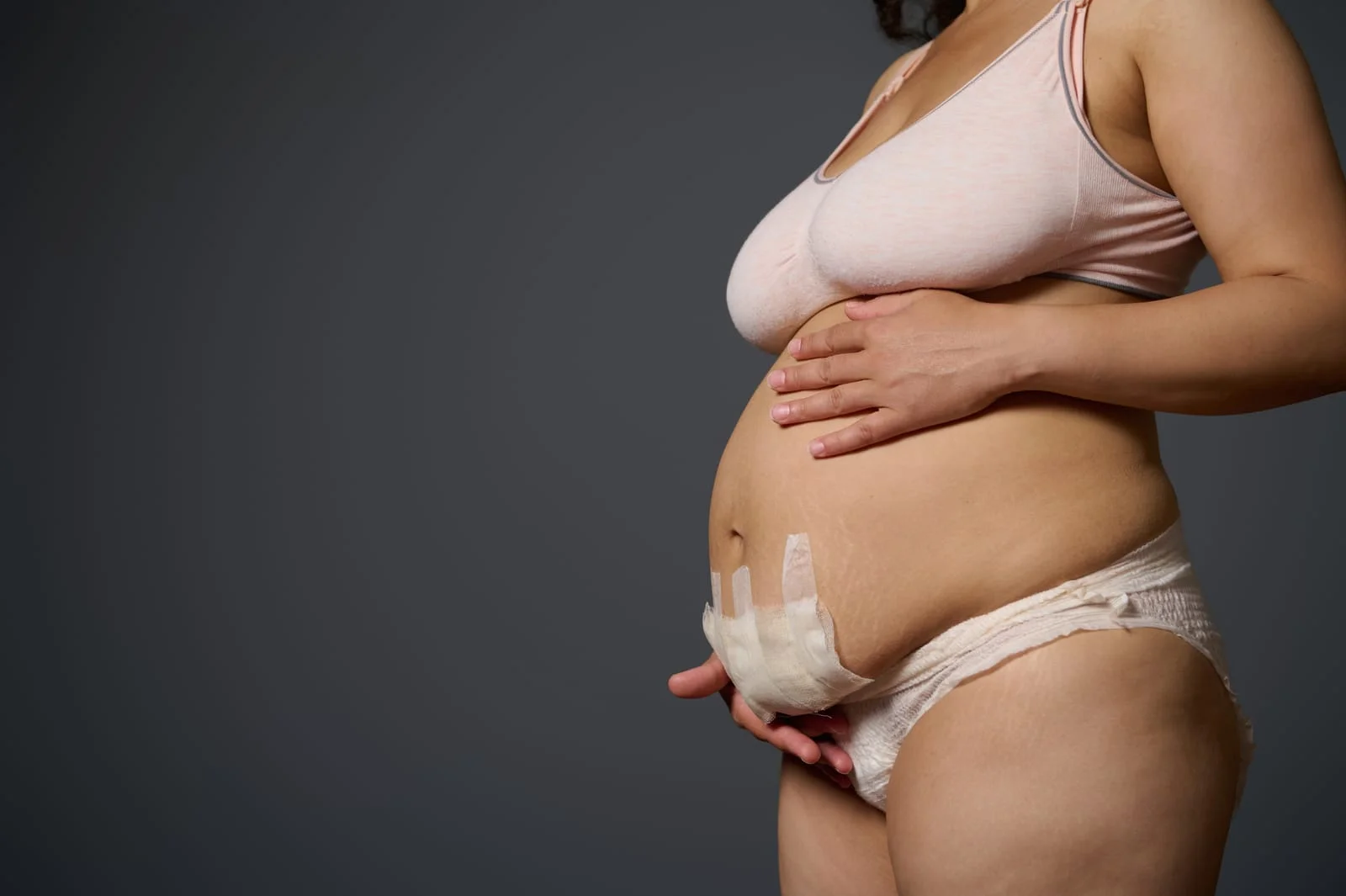
The words I repeat over and over to all postpartum clients are these: Be patient. Listen to your body. This goes double for those of you who had a surgical birth. A C-section is major abdominal surgery. Not only have you carried at least one fetus in your uterus for 40ish weeks, you have also just endured a procedure that cuts through layers of skin, fat, muscle, fascia, and the uterine wall. You are healing not only from pregnancy but also from a great deal of trauma to the tissues of your abdomen. If the C-section was unplanned, you’re also likely dealing with some strong feelings about your birth experience. And then there’s the fact that you have an infant to care for while you recover. In order to recover well, you must be gentle and patient and use exercises that are tailored to your body’s needs. You may start feeling more comfortable in your body within a few months, though a full recovery can take up to a year.
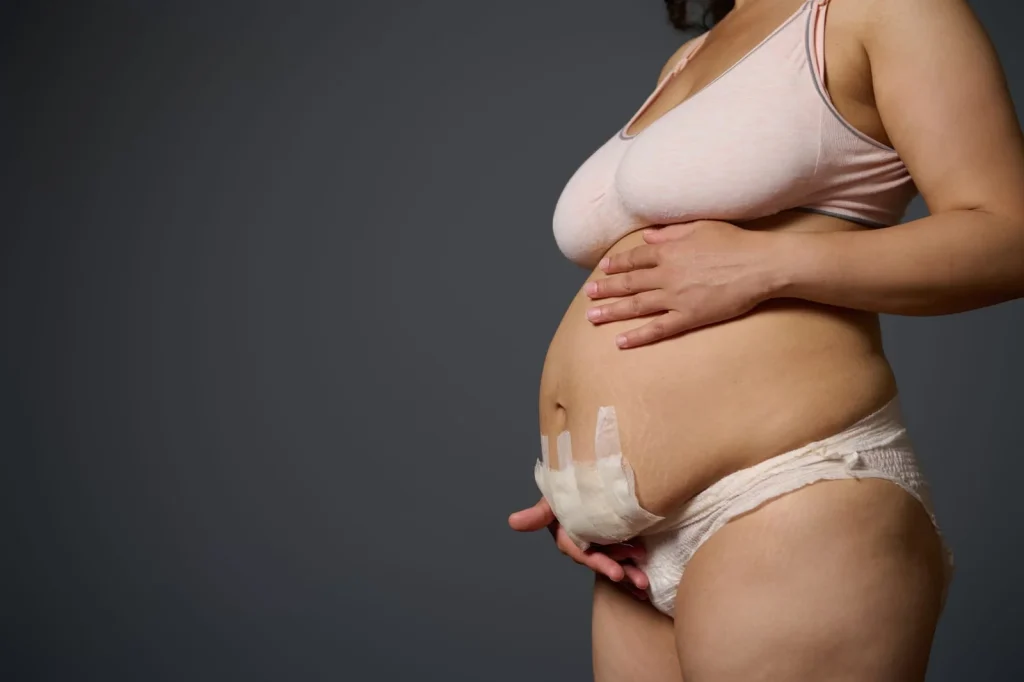
What Does C-Section Recovery Look like?
Most people require 6-12 weeks to heal from the surgical incisions, which include sutures on the uterus, inside your abdominal wall to rejoin muscle and fascia, and visible sutures on your skin. Additionally, the uterus itself has a significant internal wound from where the placenta was removed. As your body recovers from child birth, the uterus spends several weeks healing that internal wound and gradually returning to its pre-pregnancy size. During this period your incisions are also healing. It’s important to note that infections can occur at the incision sites, potentially delaying the healing process. To prevent this, ensure you keep your wounds clean and follow all care instructions provided by your doctor.
You may find that for the first few days, it is helpful to brace your incision site with a pillow or your hand when you move around or cough in order to keep the sutures intact. Ideally, you would have about a week to rest, mostly in bed (though getting up and about a bit is also encouraged to prevent the formation of blood clots). Having someone available to ensure you stay fed and hydrated during this acute healing phase is ideal. A postpartum doula, if within your means, can be a huge help with this.
Getting up and moving around as soon as you’re able to will help your recovery, but the balance between rest and activity is important. This is not the time to rearrange your pantry or take a ten-mile hike, but it is a good time to do some gentle upper body movements and to start walking around your house slowly. Begin with maybe 5-10 minutes of activity at a time, and then rest. The first few weeks of life with a newborn can be demanding–feed, burp, change, sleep, repeat. Use the rhythms you’re establishing for your baby as opportunities to allow your body to move a bit and rest a lot.
Once your sutures have fully healed, you can begin more intentional movement. You will likely have made some trips out of the house for follow-up appointments at this point (please have someone else carry that heavy car seat, if at all possible). You have likely noticed that your core feels weak and sore; this is totally normal after abdominal surgery. Now is a good time to begin to extend any walks you may have been taking with or without your baby and to start some targeted exercise practices to help your body recover.
Preparing for Exercise after C-section
Signs that you’re ready to start exercising after a C-section: Your sutures are completely healed, and you’ve been cleared by your doctor to exercise. You’re able to perform most of the activities of daily living, such as showering, cooking, etc. You might feel a bit tired, and you might notice other symptoms of postpartum recovery, but your energy levels seem relatively steady. You should always check in with your doctor before beginning any exercise program.
Some people, either due to cultural norms, personal preference, or on the advice of a physical therapist, will use an abdominal support garment such as SRC recovery shorts when they first begin exercising. There are pros and cons to using garments like these: on the one hand, you’ll feel supported and steady. On the other hand, relying on compression to provide the support that your abdominal muscles should be providing can prevent you from fully retraining the muscles–just like wearing an ankle brace is helpful in the initial phases of healing from a sprain, relying on the brace long-term is not going to make your ankle stronger. If you opted for external support in the very early postpartum phase, weaning off of it over the first month or two will give your core the opportunity to support you. Listen to your body, and pay attention to what it needs.
5 Safe and Effective C-section Recovery Exercises
Once you’ve gotten the go-ahead from your doctor, the following post-c-section recovery exercises are a great way to begin adding more movement to your day. If you have time to perform all of these every day, great! But if not, just add one or two at a time. Stop if you feel like it’s too much. You are allowed to take it slow. “Bouncing back” from giving birth is a myth. Your body will take as long as it takes.
These exercises are intended to mobilize and strengthen the pelvic floor, core, spine, and hips. Be mindful of how you feel as you exercise: if you experience increased pain, bleeding, or discharge from the incision site, excessive fatigue, or abdominal discomfort, stop exercising and contact your physician.
1\. Pelvic Tilts help get the pelvis moving and gently engage the core
- Lie on your back with feet flat on the floor and knees bent
- (Alternative position: come to sit on a firm chair with feet flat on the floor)
- Tuck and untuck your pelvis by imagining you’re bringing your pubic bone to your nose and then away from your nose
- Focus on the movement in your pelvis–try to keep your ribcage quiet
- Repeat 5-10 times
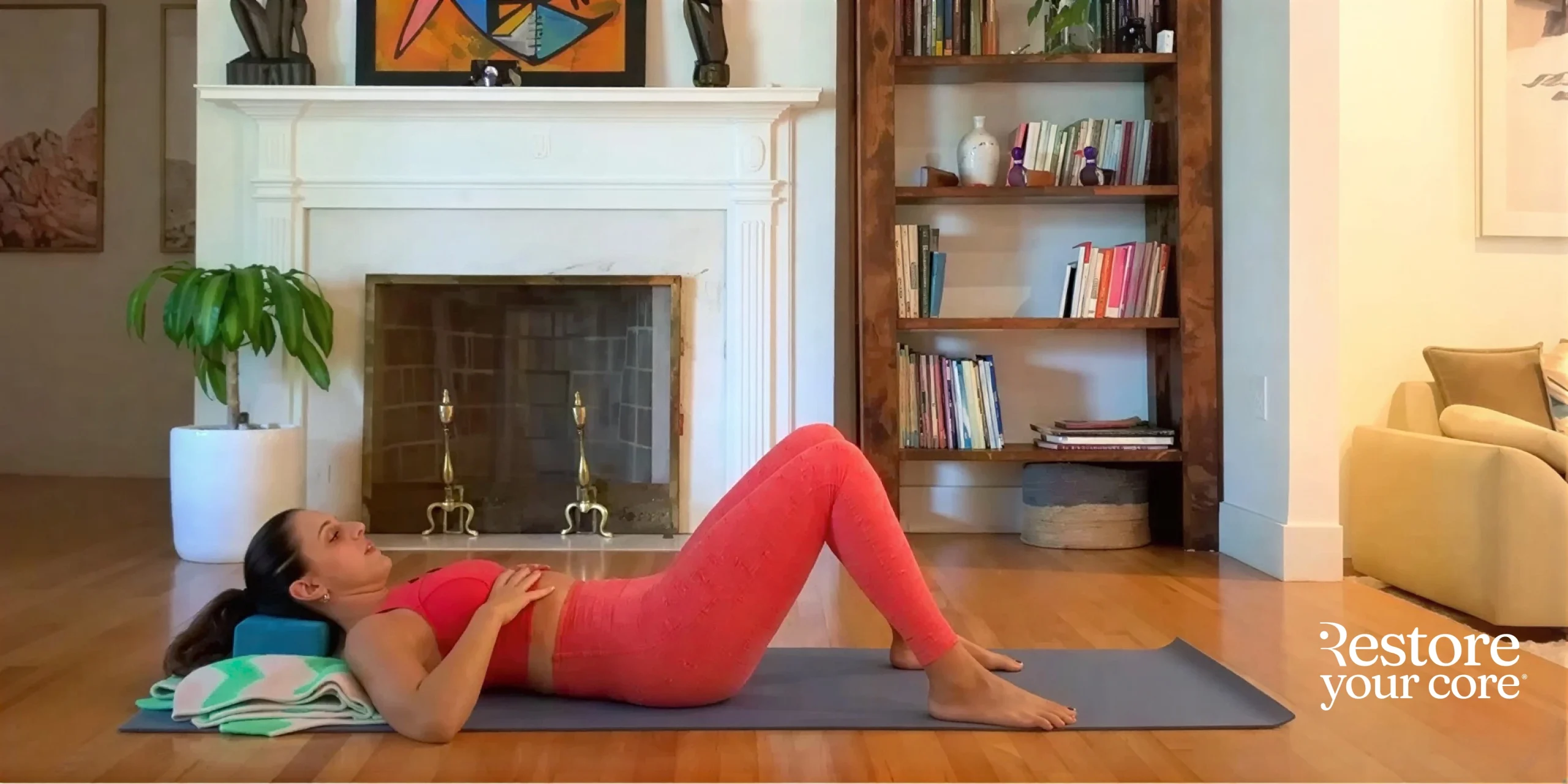
2\. Heel Slides are an easy way to begin training your core to respond to various loads
- Come on to your back with your knees bent and your feet flat
- You can bolster your head with a small rolled-up towel or blanket
- Inhale, then exhale slowly as if blowing out 99 candles on a cake. Feel your core gently engage in response to your breath
- While you exhale, slide one heel away from you along the floor
- Draw the heel back in to meet the other leg
- Repeat 6-8 times on one side
- Switch sides
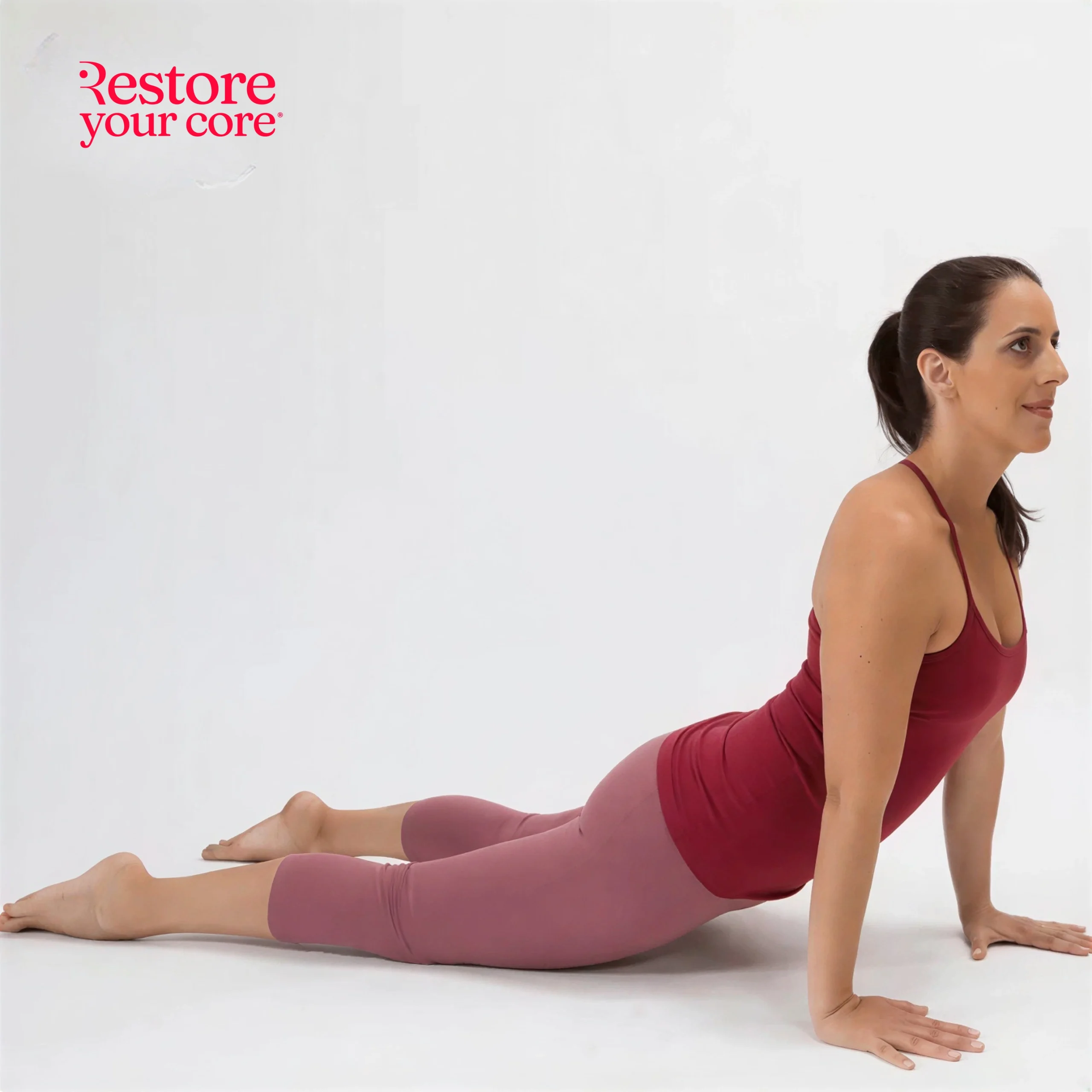
3\. Modified Cat-Cow Stretch helps mobilize your spine, engages the core, and feels good after a long day of caregiving
- Either sit on a chair with your feet flat on the floor and hands resting on your thighs, or come onto all fours on the floor, depending on what feels comfortable to you
- Inhale and lift your tailbone behind you, untucking your pelvis
- Extend through your spine, allowing your collarbones to lift
- Gently lift your chin
- Exhale and reverse the movement by tucking your tailbone under
- Round the spine, allowing the neck to relax and the head to be heavy
- Come back to neutral and repeat 3-4 times
4\. Seated Marches
- Sit in a chair with your weight resting on your sit bones, feet flat on the floor
- Inhale and allow your ribcage to expand
- As you exhale, lift one foot away from the floor–only go as high as you can without rocking your pelvis backwards
- Slowly lower the foot
- Alternate legs for 8 repetitions per side
5\. Side-Lying Leg Lifts
- Lie on your side with your head propped on your bottom arm in any way that feels comfortable to you
- You can either bend the bottom knee or keep it straight. Your hips should be stacked on top of each other, pelvis neutral
- Place your top hand on your hip or on the floor for stability
- Exhale and lift the top leg, only going as far as you can without shifting in the rest of your body
- Hold for a moment, then inhale and lower the leg down
- Repeat 8-10 times per side
When you’re recovering from a C-section and juggling a new addition to your household, it can be hard to make time for self-care. It’s worth thinking ahead: who can help me by giving me time to do this? Resting while the baby naps is great. Can you take 10 minutes for yourself first? Your rest will be deeper, and you’ll get a little stronger every day. Sometimes, blocking out regularly scheduled time in the day (first thing in the morning is a personal favorite) can help you stay on track.
While the exercises above are gentle, you can modify or reduce any of them as needed. If something doesn’t work this week, you might try it again in another week or two. If you need more guided practice, a program like Restore Your Core® can be a huge help–the express classes are less than 15 minutes long, and you can even split them up if you need to.

Create Your Long-Term C-section Recovery Plan
You have to make yourself a priority in order to recover. This is incredibly difficult to do as a caregiver, but it is essential. Even 15 minutes every day–5 to drink a hot tea in peace, 10 to move–builds a habit of self-care that can last the rest of your life. Begin small. Be patient. Keep a journal of how your body feels, one week to the next. If you’re charting your child’s growth, are you tracking your own healing? Your long-term recovery plan should include regular exercise, actual meals instead of snacks, and sleep (maybe not the first year, but yes, you will sleep again). If you’re having a hard time figuring out how to make moving your body work well for you, a session with a movement coach or physical therapist can help you get started.
Remember: healing takes time, and your body is constantly changing. Be kind to yourself as you heal.
Got questions?
FAQ
You can usually start gentle activities, like walking, within a few days after a C-section, but it’s generally recommended to wait about 6-8 weeks before beginning more strenuous exercise. Always consult your healthcare provider before starting any exercise routine.
Signs that your body is not yet ready for exercise include increased pain, bleeding, or discharge from the incision site, as well as feeling excessively fatigued or experiencing abdominal discomfort. If you notice these symptoms, stop exercising and consult your healthcare provider.
Avoid high-impact exercises, heavy lifting, intense abdominal exercises (like crunches and sit-ups), and any activities that put strain on your incision or core until your doctor gives you the all-clear.
Signs of overexertion include persistent pain, swelling, increased bleeding, fatigue, and difficulty performing daily activities. If you experience any of these symptoms, reduce the intensity of your workouts and consult your healthcare provider.
Gradually increase the intensity of your workouts by slowly adding more challenging activities. Start with low-impact exercises and slowly increase the duration and intensity of your exercise. Always listen to your body and consult your healthcare provider for guidance.
Progression to more intense workouts should be gradual and based on how your body responds. Ideally, you’d stick with C-section specific exercises for 8-12 weeks before progressing to more intense workouts.