September 10th
Can Diastasis Recti Be Fixed Without Surgery?
Diastasis recti is a complicated injury. Some people will go through rehab fully dedicated to restoring their core function and still have a gap. The truth is: diastasis recti is a long term healing process. Think of it like an ankle sprain which can take years to fully heal. Your linea alba tissue heals over time because it is not a muscle, it is tissue and tissue always takes longer to heal. Healing from diastasis recti can be done and many women have been successful, but it does take time. Once the gap is closed, your healing will still continue.
Diastasis recti differs with every person as it correlates with their body type, make, and build. Although it is highly likely for you to experience healing through rehab, there is the possibility that you may end up needing surgery. However, the need for surgery is rare. Thus, the answer to whether or not diastasis recti can be fixed without surgery can be a difficult one to answer. I will try to answer the question of healing diastasis recti below.
What is Diastasis Recti?
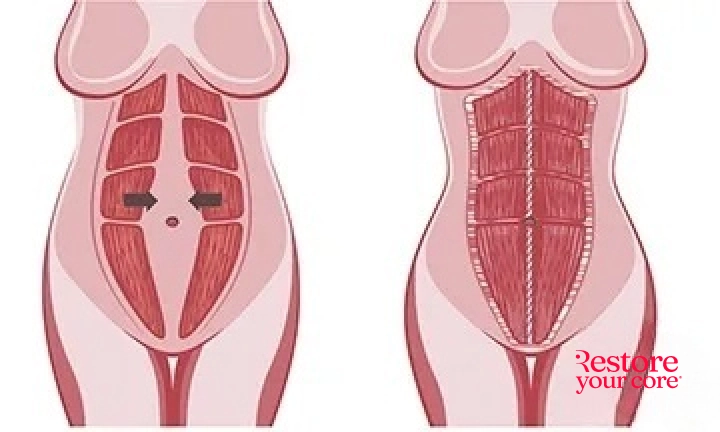
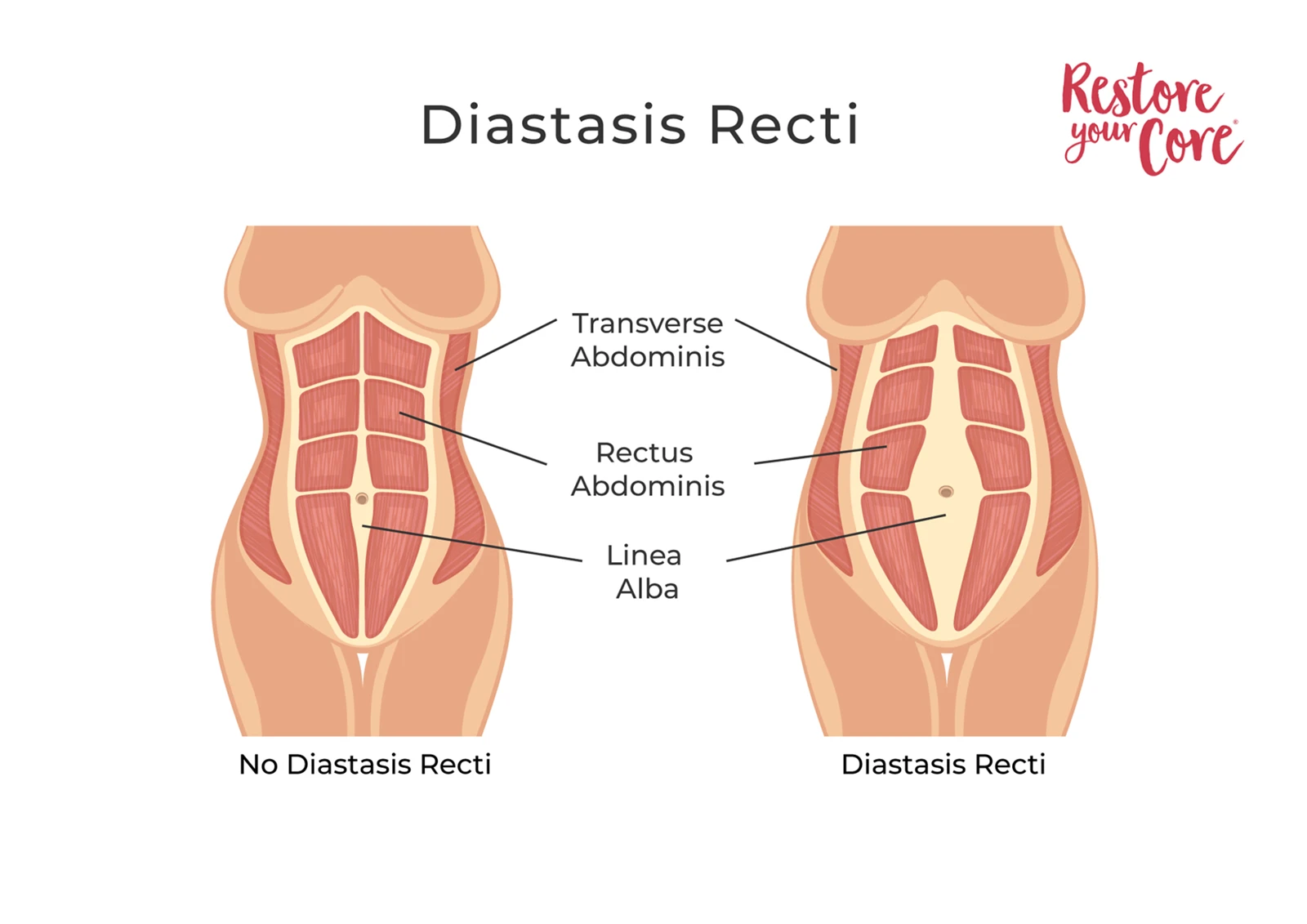
Diastasis recti is the separation of the rectus abdominis (abdominal, 6 pack) muscles from the midline tissue known as the linea alba (tissue lining the center of your core). As an injury, a diastasis recti affects the entire function of the core. Diastasis recti is also not a one-size-fits-all injury. There are many factors in play when it comes to how it is developed.
Diastasis Recti Causes
A diastasis recti can occur in many ways. From weightlifting injuries to pregnancy. Some of the most common reasons a diastasis recti develops are:
- Multiple pregnancies
- Frequent or rapid changes in weight
- Weightlifting
- Certain core exercises
- Underlying Abdominal Illnesses (i.e. stomach cancer, or cirrhosis)
- Obesity

Although these causes are more common, it is possible to have a diastasis recti and appear to be in great shape. Core function is not always associated with a slim and fit looking body. Many bodybuilders and professional athletes have a diastasis recti. Knowing core function is not a result of a flat belly is important when pursuing rehab and understanding appropriate expectations and results in healing. You can have a belly and still have a fully functional core.
Symptoms
Men and women can both develop a diastasis recti. Some of the most common symptoms of a diastasis recti are, but aren’t limited to:
- Bulge in your abdominal core (also known as a “pooch”)
- Enlarged Abdomen (or feeling as if your abdomen is enlarged)
- Pelvic floor issues (i.e. leakage)
- Abdominal gaping
- Pain in your lower back
- Poor posture
- Constipation

If you are experiencing any of these symptoms, I recommend scheduling an appointment with your physical therapist in order to determine if they are a result of diastasis recti. If they are, begin considering enrolling in a program like my Restore Your Core program to begin your healing process. In programs like Restore Your Core the focus will be on correcting any unhealthy habits and core restoring instruction to help strengthen your body to its full potential.
Is Diastasis Recti Permanent?
For many people, not at all! A diastasis recti can be healed and the gap between your abdominal muscles can be closed. However, it takes time for the gap to close and for the linea alba and connective tissues to heal and strengthen. It is much more important for you to regain full function of your core than it is to close the gap.
What Helps Close Diastasis Recti?
Exercise & Rehab
The primary method of healing a diastasis recti and closing the abdominal separation is rehab and a core building program that is specific for those with a diastasis recti. The exercises in these programs are specialized to restore core function and strengthen the linea alba.
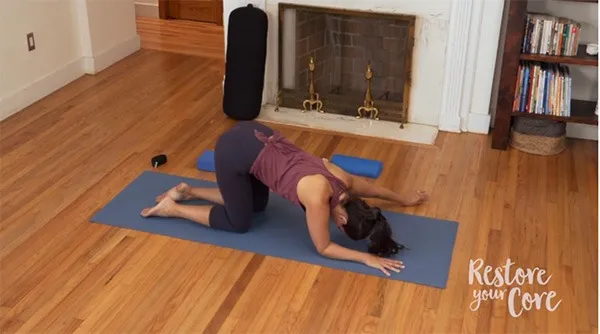
Examples of Diastasis Recti Closing Practices
- Programs like Restore Your Core teach you proper core loading strategies and encourage you to implement your whole body in healing and getting strong.
- Diet modification. For many, digestion is affected by diastasis recti. Certain foods become intolerable. Although I am not a dietician, intermittent fasting, no sugar, and no gluten has really helped many of my clients.
- Adding more load (after completing a program like Restore Your Core). This includes weights and harder moves.
- Myofascial release with an expert on the core system. Barnes and Rolfing are great systems.
- Cardio
- Being willing to do what seems difficult and setting aside fears concerning outcome and expectations.
Surgery
Unfortunately, there are times when surgery is necessary for fixing a diastasis recti. However, it is more likely to heal a diastasis recti through corrective exercises. I recommend pursuing a core restoring program for at least a year before considering surgery. Many doctors recommend this as well.
Core Building Exercises
A diastasis recti naturally occurs during pregnancy. As the womb grows, the rectus abdominis and core muscles stretch and shift in order to make room for your growing uterus. There are several ways to help prevent your chances of a diastasis recti setting in postpartum. Below are a few exercises that you can practice in various stages of your pregnancy in order to help your muscles retain strength after you give birth.
5 Exercises to Help Prevent Diastasis Recti
Candles / Core Engagement
Come to sit tall or stand. Inhale and on the exhale, imagine you are blowing out 100 candles. As you blow, you should feel your core tighten and draw inwards. This can and should be practiced whenever working out and managing a load, a weight, a core move. It automates the core and begins to integrate the function of the core to the activity that you are doing.
Seated Side Bend
Sit comfortably. Possibly on a block or some pillows. Hold a yoga strap or belt overhead. Bend your elbows slightly to take the stress off of your neck and shoulders. Exhale, blow candles, tighten your core and side bend right and then exhale to go left. Your core should not bulge, brace or push out as you do these. These are great for upper body mobility, torso length and strength and are a great way to work your core without strain.
Twist
Sit comfortably. Possibly on a block or some pillows. Hold a yoga strap or belt in front of you. Exhale to blow candles, feel your core tighten and then rotate your chest to the right, come center and then exhale to go left. Your core should not bulge, brace or push out as you do these. These are great for upper body mobility and are a great way to work your core without strain. One of the keys to preventing a diastasis recti is to ensure that your upper body is mobile, supple and strong.
Side Balance
For this exercise, you will balance in a supported side plank. Your right knee and right hand down on the mat and your left arm straight up to the sky with your left leg straight on the mat. Use your candles for support as you exhale. This move is great for balance, arm and shoulder strength and a ton of core support.
Opposite Reach
For this exercise, you will come onto your hands and knees and slowly lift the opposite arm and leg. If that is too hard, do just one at a time. As you lift, you exhale and blow candles, feel your core engage and be extra sure not to bear down, brace or bulge your core! Amazing for your shoulders, arms, core and booty.
For more on these exercises. Click here.
To read more about diastasis recti prevention, click here. (link for how to prevent)
Restore Your Core: Diastasis Recti
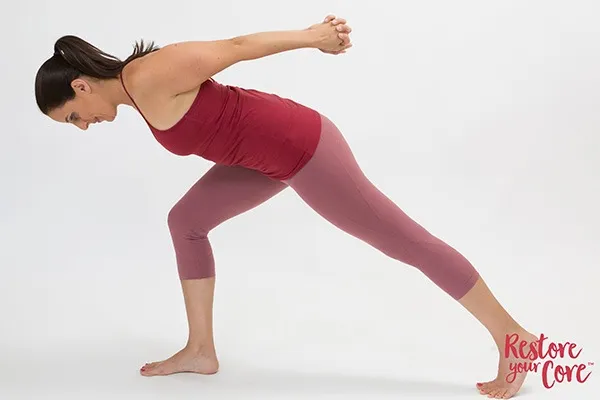
Finding a well balanced and intensive program whose goal is to rebuild strength and restore function to your body is one of the most important aspects of healing your diastasis recti. Below are a few exercises that have helped many people close the gap and strengthen their core.
5 Exercises to Help with Diastasis Recti
Candles
Candles is another breathing technique which contracts your abs while limiting the pressure in your abdomen. Inhale normally. On your exhale, release your breath slowly as if you were blowing out a lot of candles. If done properly, you should feel your abdominal muscles contract/respond.
Tabletop or Reverse Marching
Lie down with knees bent similarly to that of a crunch. Exhale as you would with the candles method and begin to alternate bringing your knees, while still bent, toward your body.
Goddess Side Bend
Stand with knees aligned with feet, feet aligned with shoulders. Exhale and bend your knees slowly until they are level with your ankles. Use your heels to stabilize your body. Side bend by raising your arm while maintaining resistance. Repeat side rotations 3x and then return to a standing position.
Goddess Squat Twist
Repeat the beginning steps outlined above, but place your arms across your chest. While in the goddess position, twist by using your ribcage, not your arms. Repeat side twists 4x and return to a standing position.
Lunge with a Twist and Chop
While using correct posture, bring one leg forward and lift your hands, palms crossed, in front of your face. Then slowly begin to twist toward your forward leg. As you twist toward your forward leg, bring your arms across your thigh in a chopping motion. Repeat while alternating between sides and legs.
Healing looks different for each person and the time it takes to heal depends on the severity of the injury to the linea alba and connective tissues. Knowing it takes a long time should give you hope! For some people it can take years to properly heal and to restore full function. Getting back to doing all the things you love can happen. Healing just takes time.
To learn more, click here.
Diastasis recti is a complicated injury. Some people will go through rehab fully dedicated to restoring their core function and still have a gap. The truth is: diastasis recti is a long term healing process. Think of it like an ankle sprain which can take years to fully heal. Your linea alba tissue heals over time because it is not a muscle, it is tissue and tissue always takes longer to heal. Healing from diastasis recti can be done and many women have been successful, but it does take time. Once the gap is closed, your healing will still continue.
Diastasis recti differs with every person as it correlates with their body type, make, and build. Although it is highly likely for you to experience healing through rehab, there is the possibility that you may end up needing surgery. However, the need for surgery is rare. Thus, the answer to whether or not diastasis recti can be fixed without surgery can be a difficult one to answer. I will try to answer the question of healing diastasis recti below.
What is Diastasis Recti?
Diastasis recti is the separation of the rectus abdominis (abdominal, 6 pack) muscles from the midline tissue known as the linea alba (tissue lining the center of your core). As an injury, a diastasis recti affects the entire function of the core. Diastasis recti is also not a one-size-fits-all injury. There are many factors in play when it comes to how it is developed.
Diastasis Recti Causes
A diastasis recti can occur in many ways. From weightlifting injuries to pregnancy. Some of the most common reasons a diastasis recti develops are:
- Multiple pregnancies
- Frequent or rapid changes in weight
- Weightlifting
- Certain core exercises
- Underlying Abdominal Illnesses (i.e. stomach cancer, or cirrhosis)
- Obesity

Although these causes are more common, it is possible to have a diastasis recti and appear to be in great shape. Core function is not always associated with a slim and fit looking body. Many bodybuilders and professional athletes have a diastasis recti. Knowing core function is not a result of a flat belly is important when pursuing rehab and understanding appropriate expectations and results in healing. You can have a belly and still have a fully functional core.
Symptoms
Men and women can both develop a diastasis recti. Some of the most common symptoms of a diastasis recti are, but aren’t limited to:
- Bulge in your abdominal core (also known as a “pooch”)
- Enlarged Abdomen (or feeling as if your abdomen is enlarged)
- Pelvic floor issues (i.e. leakage)
- Abdominal gaping
- Pain in your lower back
- Poor posture
- Constipation
If you are experiencing any of these symptoms, I recommend scheduling an appointment with your physical therapist in order to determine if they are a result of diastasis recti. If they are, begin considering enrolling in a program like my Restore Your Core® program to begin your healing process. In programs like Restore Your Core the focus will be on correcting any unhealthy habits and core restoring instruction to help strengthen your body to its full potential.
Is Diastasis Recti Permanent?
For many people, not at all! A diastasis recti can be healed and the gap between your abdominal muscles can be closed. However, it takes time for the gap to close and for the linea alba and connective tissues to heal and strengthen. It is much more important for you to regain full function of your core than it is to close the gap.
What Helps Close Diastasis Recti?
Exercise & Rehab
The primary method of healing a diastasis recti and closing the abdominal separation is rehab and a core building program that is specific for those with a diastasis recti. The exercises in these programs are specialized to restore core function and strengthen the linea alba.
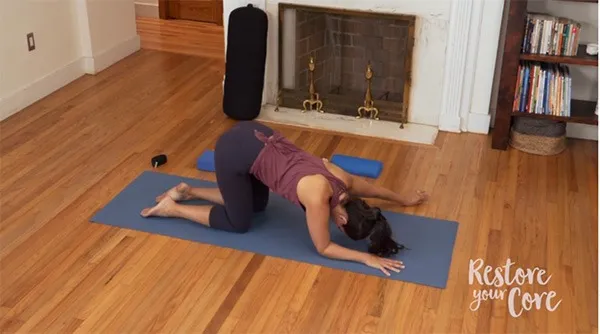
Examples of Diastasis Recti Closing Practices
- Programs like Restore Your Core® teach you proper core loading strategies and encourage you to implement your whole body in healing and getting strong.
- Diet modification. For many, digestion is affected by diastasis recti. Certain foods become intolerable. Although I am not a dietician, intermittent fasting, no sugar, and no gluten has really helped many of my clients.
- Adding more load (after completing a program like Restore Your Core®). This includes weights and harder moves.
- Myofascial release with an expert on the core system. Barnes and Rolfing are great systems.
- Cardio
- Being willing to do what seems difficult and setting aside fears concerning outcome and expectations.
Surgery
Unfortunately, there are times when surgery is necessary for fixing a diastasis recti. However, it is more likely to heal a diastasis recti through corrective exercises. I recommend pursuing a core restoring program for at least a year before considering surgery. Many doctors recommend this as well.
Core Building Exercises
A diastasis recti naturally occurs during pregnancy. As the womb grows, the rectus abdominis and core muscles stretch and shift in order to make room for your growing uterus. There are several ways to help prevent your chances of a diastasis recti setting in postpartum. Below are a few exercises that you can practice in various stages of your pregnancy in order to help your muscles retain strength after you give birth.
5 Exercises to Help Prevent Diastasis Recti
Candles / Core Engagement
Come to sit tall or stand. Inhale and on the exhale, imagine you are blowing out 100 candles. As you blow, you should feel your core tighten and draw inwards. This can and should be practiced whenever working out and managing a load, a weight, a core move. It automates the core and begins to integrate the function of the core to the activity that you are doing.
Seated Side Bend
Sit comfortably. Possibly on a block or some pillows. Hold a yoga strap or belt overhead. Bend your elbows slightly to take the stress off of your neck and shoulders. Exhale, blow candles, tighten your core and side bend right and then exhale to go left. Your core should not bulge, brace or push out as you do these. These are great for upper body mobility, torso length and strength and are a great way to work your core without strain.
Twist
Sit comfortably. Possibly on a block or some pillows. Hold a yoga strap or belt in front of you. Exhale to blow candles, feel your core tighten and then rotate your chest to the right, come center and then exhale to go left. Your core should not bulge, brace or push out as you do these. These are great for upper body mobility and are a great way to work your core without strain. One of the keys to preventing a diastasis recti is to ensure that your upper body is mobile, supple and strong.
Side Balance
For this exercise, you will balance in a supported side plank. Your right knee and right hand down on the mat and your left arm straight up to the sky with your left leg straight on the mat. Use your candles for support as you exhale. This move is great for balance, arm and shoulder strength and a ton of core support.
Opposite Reach
For this exercise, you will come onto your hands and knees and slowly lift the opposite arm and leg. If that is too hard, do just one at a time. As you lift, you exhale and blow candles, feel your core engage and be extra sure not to bear down, brace or bulge your core! Amazing for your shoulders, arms, core and booty.
For more on these exercises. Click **here**.
To read more about diastasis recti prevention, click here. (link for how to prevent)
Restore Your Core: Diastasis Recti
Finding a well balanced and intensive program whose goal is to rebuild strength and restore function to your body is one of the most important aspects of healing your diastasis recti. Below are a few exercises that have helped many people close the gap and strengthen their core.
5 Exercises to Help with Diastasis Recti
Candles
Candles is another breathing technique which contracts your abs while limiting the pressure in your abdomen. Inhale normally. On your exhale, release your breath slowly as if you were blowing out a lot of candles. If done properly, you should feel your abdominal muscles contract/respond.
Tabletop or Reverse Marching
Lie down with knees bent similarly to that of a crunch. Exhale as you would with the candles method and begin to alternate bringing your knees, while still bent, toward your body.
Goddess Side Bend
Stand with knees aligned with feet, feet aligned with shoulders. Exhale and bend your knees slowly until they are level with your ankles. Use your heels to stabilize your body. Side bend by raising your arm while maintaining resistance. Repeat side rotations 3x and then return to a standing position.
Goddess Squat Twist
Repeat the beginning steps outlined above, but place your arms across your chest. While in the goddess position, twist by using your ribcage, not your arms. Repeat side twists 4x and return to a standing position.
Lunge with a Twist and Chop
While using correct posture, bring one leg forward and lift your hands, palms crossed, in front of your face. Then slowly begin to twist toward your forward leg. As you twist toward your forward leg, bring your arms across your thigh in a chopping motion. Repeat while alternating between sides and legs.
Healing looks different for each person and the time it takes to heal depends on the severity of the injury to the linea alba and connective tissues. Knowing it takes a long time should give you hope! For some people it can take years to properly heal and to restore full function. Getting back to doing all the things you love can happen. Healing just takes time.
To learn more, click **here**.
Got questions?
FAQ
Diastasis Recti abdominis is a common and natural effect of pregnancy. When the connective tissue thins to allow the abdominal wall muscles to separate, creating space for the growing baby, in most cases, this will return to normal in the weeks and months postpartum. It doesn’t happen naturally for some women, and they may need physical therapy if they don’t heal within 6 weeks to 3 months following delivery. Surgery is usually only considered in extreme cases if the gap does not close within a year of physical therapy.
A great way to prevent worsening your diastasis recti is avoiding exercises that can make it worse, such as crunches, planks and twists. It’s also important not to jump quickly out of bed or do anything else that causes a visible doming in the ab muscles. Instead, focus on safe diastasis recti exercises like those in RYC®‘s foundational stages.
Yes! There have been many women who have completed the RYC® 12 -Week program and seen their diastasis recti close considerably, if not all the way. It’s not only possible to heal diastasis recti without surgery – in many cases, you can also restore core strength and full-body function without the need for invasive procedures.
Connective tissue is slow to heal. Many men and women can use simple core-strengthening techniques to heal their Diastasis Recti. People working with a rehab program should only consider surgery if they have been working with a rehabilitation program or with a physical therapist to restore function for a minimum of 1 year. Surgery can fail or create other issues if one doesn’t address the underlying problem of excess intra-abdominal pressure. If the Diastasis Recti persists after one year of therapy, it would be appropriate to consult a surgeon.
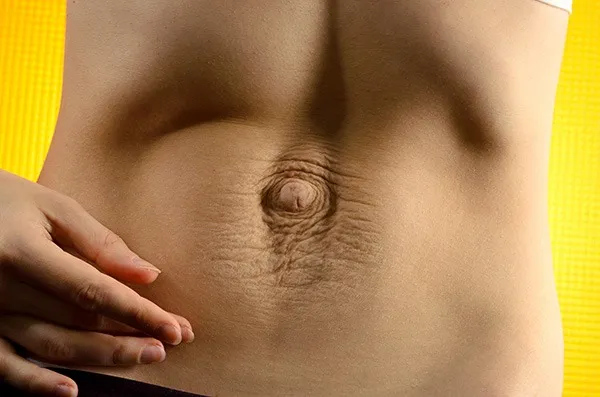
The most common symptom of Diastasis Recti is a bulge in the center of the abdomen, especially when you strain or contract your abdominal muscles.
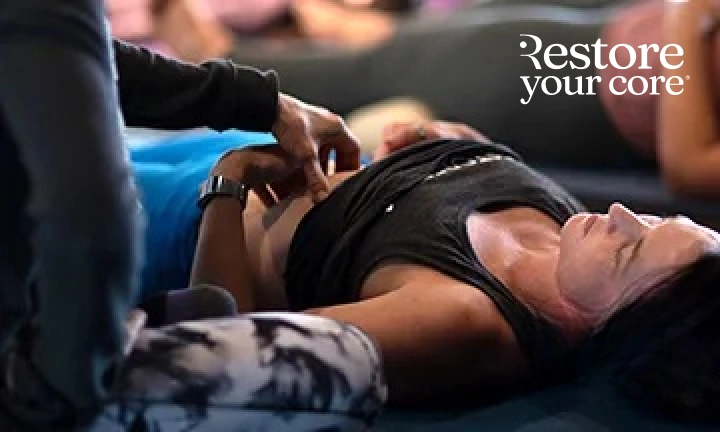
Medically speaking, a separation of 2 finger widths or more is considered Diastasis Recti.
Diastasis recti can lead to back pain, digestive issues, urine leaking and lots of general discomfort. It can also stop you from being able to workout efficiently and reach your goals safely. In some rare cases tissue tears can lead to hernias where organs begin to poke out of the openings in your tissues. The RYC® program targets full-body healing, not just cosmetic results, to address these long-term concerns.
Belly binding is thought to help close the Diastasis Recti gap by wrapping a binder around your torso. However, wearing a splint or binder won’t strengthen or tighten the muscles – but it might provide support for lower back pain and other issues related to pregnancy (or postpartum) and be an appropriate tool in the later stages of pregnancy and early weeks postpartum.
Women often ask me if they should run with Diastasis Recti. They’re hoping for a definitive answer, but in my professional opinion, the response is not so simple. If you are well past the eight weeks postpartum, adding in low intensity exercises can be a great way to regain strength. However, this may look different for each person.
If you feel a gap or softness with muscles on either side, you may have Diastasis Recti. If you can feel the tensed muscles underneath your belly, you’re probably just dealing with some abdominal fat. The good news is that most cases of Diastasis Recti are temporary (and abdominal fat can be temporary too!).
Water is essential for optimal health. To give yourself the best chance at healing, you need to get into good habits and maintain hydration – and that means hydrating with water! It doesn’t all have to be plain water; diluted juices or herbal teas are also encouraged for increased hydration levels.
Diastasis Recti, is not a Hernia. Clinically, a Diastasis can look like an Inguinal or Umbilical Hernia when flexing your abdomen; you may notice a bulge near the belly button.
Diastasis Recti is a condition that develops when too much pressure is put on the abdominal muscles. This can cause the connective tissue between the rectus abdominis muscles to thin and create a bulge or a dip in the center of the abdomen. Depending on the activity and core engagement strategy, you may present with a bulge or a dip.
Digestion issues are a common complaint among those that have Diastasis Recti. Speak to a registered dietician or nutritionist if this is an issue for you.